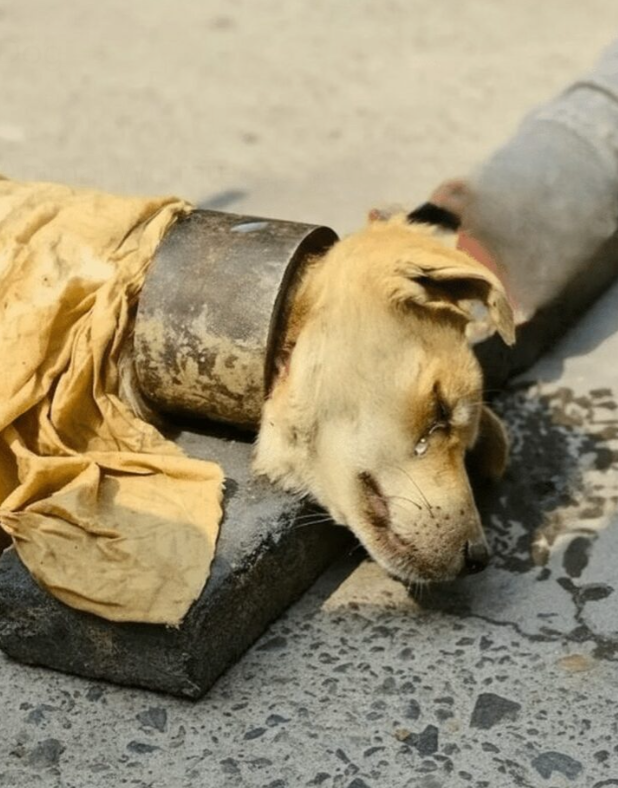
Efforts to remove the collar by hand were unsuccessful due to the way it had tightened over time. Rescuers quickly employed specialized cutting tools to free the animal while minimizing further harm. Every moment counted as they worked to relieve the dog’s suffering.
Once the collar was removed, the dog was rushed to a veterinary clinic. The veterinary team acted swiftly to clean the wounds and initiate treatment to prevent infection. Thankfully, the dog stabilized under professional care, but the impact of the rescue resonated far beyond the clinic. Photos and updates flooded social media, prompting widespread concern and calls for accountability.
VIDEO: Watch the Dramatic Rescue of a dog with an Embedded Collar
The incident triggered an investigation into the circumstances leading to the dog’s distress, but it also highlighted a larger issue: China lacks comprehensive national laws to address animal cruelty consistently. The absence of clear definitions and penalties creates a legal gray area that complicates efforts to prevent abuse.
Alongside the rescue, discussions emerged about the controversial practice of dog meat consumption, particularly in certain regions of China. While some view this tradition as culturally significant, attitudes are shifting, especially among younger generations who increasingly regard dogs as companions. This shift has been amplified by urbanization and global exposure, making it clearer that public sentiment is evolving.
The rescue also echoed a similar large-scale intervention earlier this year in Chongqing, where volunteers rescued over 1,500 dogs from cramped transport vehicles. This shocking incident further underscored the systemic issues within the dog meat trade and fueled demands for stronger oversight and reform.
Historically, dogs have played diverse roles in Chinese culture, serving as guardians and companions. However, rapid modernization has transformed perspectives on pet ownership. In 2020, a pivotal change occurred when dogs were removed from China’s list of livestock animals, signaling a shift toward viewing them primarily as companions rather than livestock.
The rescue operation and ongoing public discourse reflect a society grappling with complex cultural changes. As compassion grows, so does the call for reforms that align with modern ethical standards while respecting historical contex.
What began as the rescue of one suffering dog has become a catalyst for a wider conversation about animal welfare and cultural evolution in China. This case illustrates that awareness can lead to dialogue, and dialogue can pave the way for meaningful reform in animal protection.